
Blue, Green, Red Toothpaste… What Do These Colors Actually Mean? 🧪🦷
Do the colors matter? Or is it all just marketing? Let’s break this down the right way!
😬 Introduction:
You’re standing in front of the toothpaste shelf at the supermarket, staring at a color explosion worthy of an art gallery!
Blue toothpaste, green gel, one with a red swirl, another that looks like tie-dye!
And you think: “Each color must have a medical purpose… right?”
Well, the truth is… not everything that shines is fluoride.
Today we’re breaking down the real story behind toothpaste colors—separating facts from the infamous WhatsApp rumors. Ready? 😏
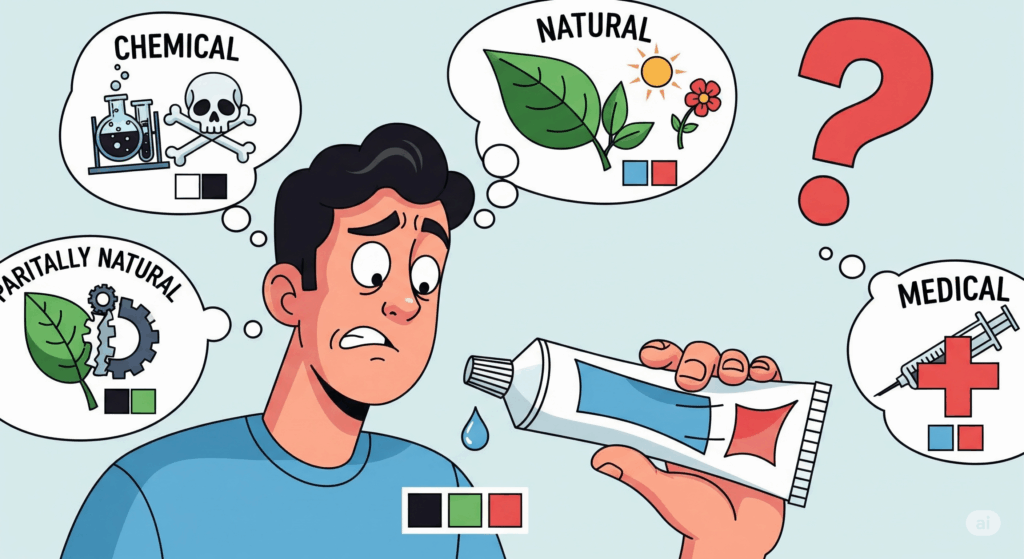
🟥🟩🟦 First: The famous myth about the colored squares on the bottom of the tube
Maybe you’ve seen this message floating around:
“If the tube has a green square = Natural 💚
Blue = Natural + Medicine 💙
Red = Natural + Chemical ❤️
Black = Pure Chemicals 🖤”
Truth? That’s an old, recycled myth.
Those colored marks have nothing to do with the ingredients.
They’re simply markers used by manufacturing machines to know where to cut and seal the tube.
✔️ In short?
The black mark = a cutting guide for machines, not a symbol of toxic doom!
🤔 Second: So… what really makes toothpaste different from each other?
- Fluoride: The absolute must-have
A legit toothpaste should contain fluoride because it:
- Strengthens enamel
- Prevents cavities
- Fights bacteria
❌ If the toothpaste doesn’t have fluoride, it’s just for looks—not protection.
- Whitening Toothpastes
These contain ingredients like peroxide or silica to remove surface stains, but:
- They don’t whiten the tooth from the inside
- Overuse can lead to sensitivity
- Sensitivity Toothpastes
For those who feel pain with hot or cold drinks.
They often contain potassium nitrate to help calm nerve signals.
- Kids’ Toothpastes
Lower fluoride concentration, with kid-friendly flavors (strawberry, berry, or “dinosaur”).
Don’t use adult toothpaste for your child—especially if they don’t know how to spit yet.
- Herbal or “Natural” Toothpastes
Contain ingredients like:
- Tea tree oil
- Activated charcoal
- Organic mint
But watch out… some don’t contain fluoride. Always read the label!
🧪 Third: So what should you pick? (A quick guide)
| Your need | Recommended toothpaste |
|---|---|
| General/oral health | Fluoride-based toothpaste |
| Whitening goals | Whitening paste (moderate use only) |
| Sensitivity | Sensitive formula toothpaste |
| Young child | Kids’ toothpaste with low fluoride |
| Nature lover | Herbal toothpaste (with fluoride) |
🧼 Fourth: Smart tips when choosing toothpaste
- Don’t judge by color and design
- Read the ingredients—not just the front label
- Don’t switch your toothpaste every week (consistency is key)
- Use a pea-sized amount (not plumber-level paste 😅)
- Don’t fall for “3-day instant whitening” promises—your teeth aren’t kitchen tiles!
😂 Minty-Fresh Conclusion:
If you still think the color stripe on the bottom of your toothpaste tube tells you whether it’s “safe or toxic”…
Let us break it to you gently:
That poor stripe is just a victim of a viral hoax.
What really matters is: fluoride content, abrasiveness, your dental needs, and what problem you’re addressing.
So next time you’re in the toothpaste aisle—don’t choose by color…
Choose based on your mouth 😁
🔍 Target SEO Keywords:
- Meaning of toothpaste colors
- Color strip on toothpaste tube
- Differences between types of toothpaste
- Whitening toothpaste guide
- Best toothpaste for sensitive teeth
- Kids’ toothpaste
- Fluoride in toothpaste
- Toothpaste color strip myth
- Choosing the right toothpaste
- Natural toothpaste benefits